
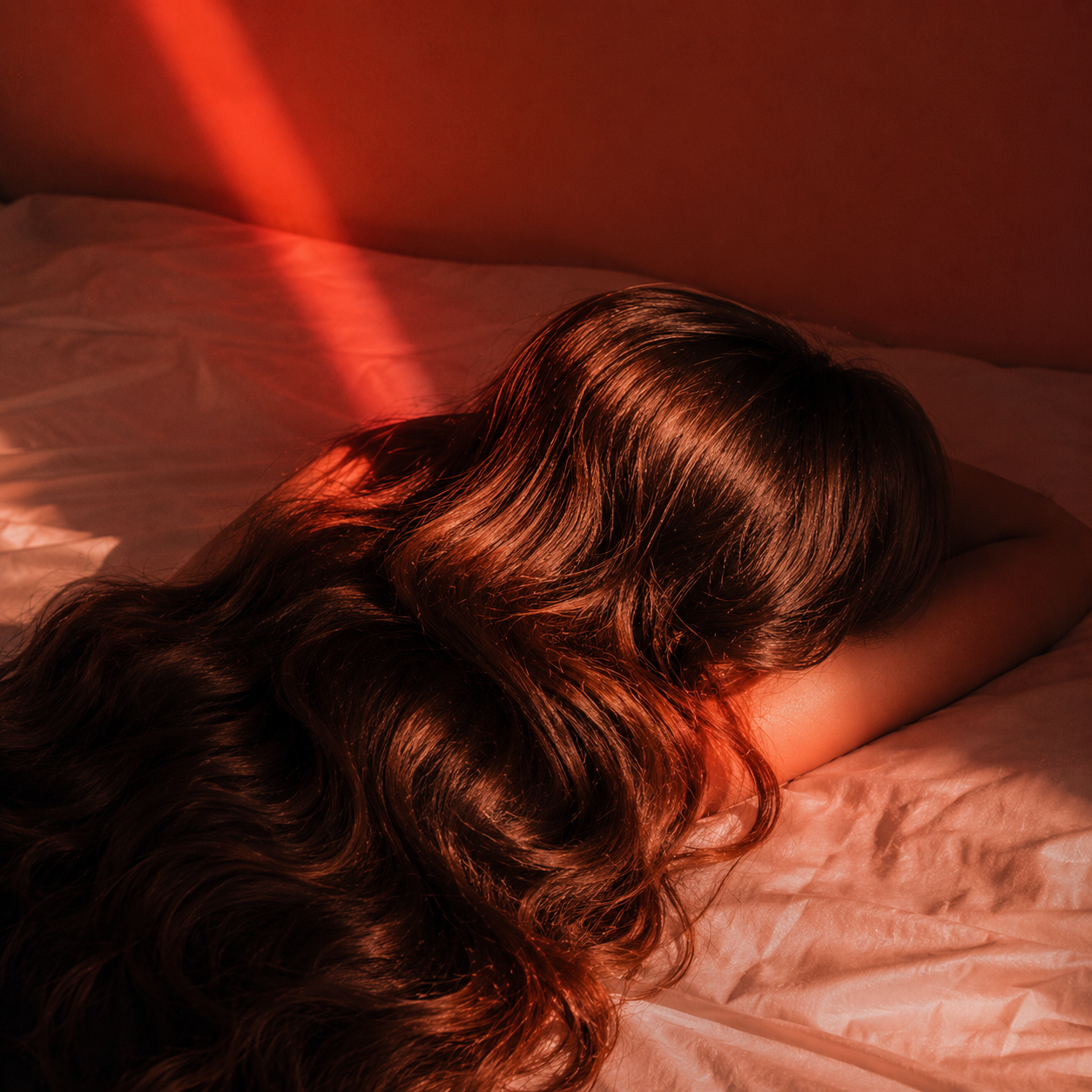
Hair thinning can be frustrating. Whether you've noticed more hair in the shower, a widening part, or a gradual loss of density over time, it's natural to look for solutions that are backed by science rather than empty promises.
One technology receiving growing attention is red light therapy, also known as photobiomodulation or low-level light therapy (LLLT). Originally studied for wound healing and tissue repair, researchers have spent decades investigating its potential role in supporting hair growth and scalp health.
So, does it actually work?
The answer is encouraging but, like most wellness technologies, it's more nuanced than many headlines suggest.
What Is Red Light Therapy?
Red light therapy uses specific wavelengths of visible red and near-infrared light to deliver light energy to the body's tissues.
Unlike ultraviolet (UV) light, red and near-infrared light do not tan or burn the skin. Instead, these wavelengths are being studied for their ability to support normal cellular function.
Once absorbed by cells, light energy interacts with structures inside the mitochondria—the tiny "power stations" responsible for producing ATP (adenosine triphosphate), the energy your cells use to function.
Hair follicles are among the most metabolically active structures in the body, making them particularly interesting targets for photobiomodulation research.
Can Red Light Therapy Help Hair Growth?
Current research suggests that red light therapy may help support hair growth in people experiencing certain types of hair thinning, particularly androgenetic alopecia (commonly known as male and female pattern hair loss).
Several clinical studies have reported improvements in:
- Hair density
- Hair thickness
- Hair count
- Overall hair appearance
It's important to understand that red light therapy is not a miracle cure, nor does it work overnight. Hair growth is a gradual biological process, and results depend on factors such as the underlying cause of hair loss, consistency of treatment, and individual differences.
How Does It Work?
Researchers believe several biological mechanisms may contribute to the observed improvements.
Cellular Energy
Red light helps stimulate mitochondrial activity, increasing ATP production. Hair follicles require significant energy to support normal growth, making cellular energy an important part of the process.
Improved Microcirculation
Healthy circulation delivers oxygen and nutrients to hair follicles. Studies suggest photobiomodulation may support healthy blood flow in treated tissues.
Reduced Oxidative Stress
Hair follicles are influenced by inflammation and oxidative stress. Red light therapy has been investigated for its potential role in supporting the body's natural inflammatory response.
Supporting the Hair Growth Cycle
Hair naturally cycles through growth (anagen), transition (catagen), and resting (telogen) phases.
Researchers believe red light therapy may help encourage follicles to remain in the growth phase for longer, although this continues to be an active area of research.
What Does the Research Say?
Low-level light therapy is one of the more extensively studied non-invasive approaches for androgenetic alopecia.
Multiple randomized clinical trials and systematic reviews have found improvements in hair density and hair thickness after consistent use over several months.
While outcomes vary between individuals, the overall body of evidence suggests red light therapy can be a useful addition to a broader hair-care routine, particularly when used consistently and alongside medical advice where appropriate.
Researchers continue to investigate which wavelengths, treatment durations, and dosing schedules produce the most reliable outcomes.
Which Wavelengths Are Best?
Not all red light devices are created equal.
Research has explored several wavelengths, including:
- 630–660nm: commonly studied for skin and superficial tissues
- 810–850nm: penetrates deeper tissues and is widely used in photobiomodulation research
- 940nm and beyond: increasingly explored for deeper tissue applications
Rather than relying on a single wavelength, many modern devices combine multiple wavelengths to support different tissue depths.
Helion panels feature 8 targeted red and near-infrared wavelengths, extending up to 1060nm, to provide comprehensive light coverage across multiple tissue depths.
How Long Does It Take to See Results?
Hair growth requires patience.
Most published studies evaluate outcomes after approximately 12 to 24 weeks of consistent treatment.
For best results, consistency matters more than intensity.
Choosing the Right Device
If you're considering red light therapy for hair growth, there are several features worth evaluating:
✓ Multiple clinically relevant wavelengths
✓ Consistent irradiance across the treatment area
✓ Adequate treatment coverage
✓ Reliable build quality
✓ A routine you'll realistically maintain
Remember, even the best device only works if it's used consistently.
Frequently Asked Questions
Does red light therapy regrow hair?
Current research suggests that red light therapy may help improve hair density and hair thickness in people experiencing androgenetic alopecia (pattern hair loss) when used consistently over time.
How long does it take to see results from red light therapy?
Hair grows in cycles, so results take time. Most clinical studies evaluate participants after 12 to 24 weeks of consistent use. Some people may notice reduced hair shedding earlier, while visible improvements in thickness and density often require several months. Like exercise, consistency is far more important than intensity.
Can women use red light therapy?
Yes. Research includes both men and women experiencing pattern hair loss.
Can I combine red light therapy with Minoxidil?
Yes. Red light therapy and Minoxidil work through different mechanisms, which is why many dermatologists use them together as part of a comprehensive hair loss treatment plan. If you're using prescription medications or undergoing treatment for hair loss, consult your healthcare provider before adding a new therapy to your routine.
How often should I use red light therapy?
At Helion, we recommend using your red light therapy panel 5 to 7 times per week for 10–15 minutes per session, depending on your distance from the panel and your overall treatment routine.
Scientific References
The information in this article is based on current research into photobiomodulation (PBM) and low-level light therapy (LLLT). While research continues to evolve, the following peer-reviewed publications provide valuable insight into the potential role of red light therapy in supporting hair growth and scalp health.
- Adil A, Godwin M. The effectiveness of treatments for androgenetic alopecia: A systematic review and meta-analysis. Journal of the American Academy of Dermatology. 2017.
- Avci P, Gupta A, Clark J, et al. Low-Level Laser (Light) Therapy (LLLT) for Treatment of Hair Loss. Lasers in Surgery and Medicine. 2014.
- Gupta AK, Foley KA. A Critical Assessment of the Evidence for Low-Level Laser Therapy in the Treatment of Hair Loss. Dermatologic Surgery. 2017.
- Kim H, Choi JW, Kim JY, et al. Low-Level Light Therapy for Androgenetic Alopecia: A Systematic Review and Meta-analysis. Journal of Cosmetic Dermatology.
- Hamblin MR. Mechanisms and Applications of the Anti-inflammatory Effects of Photobiomodulation. AIMS Biophysics. 2017.
- Hamblin MR. Photobiomodulation or Low-Level Laser Therapy. Journal of Biophotonics. 2016.
- Chung H, Dai T, Sharma SK, et al. The Nuts and Bolts of Low-Level Laser (Light) Therapy. Annals of Biomedical Engineering. 2012.

Leave a comment
This site is protected by hCaptcha and the hCaptcha Privacy Policy and Terms of Service apply.