
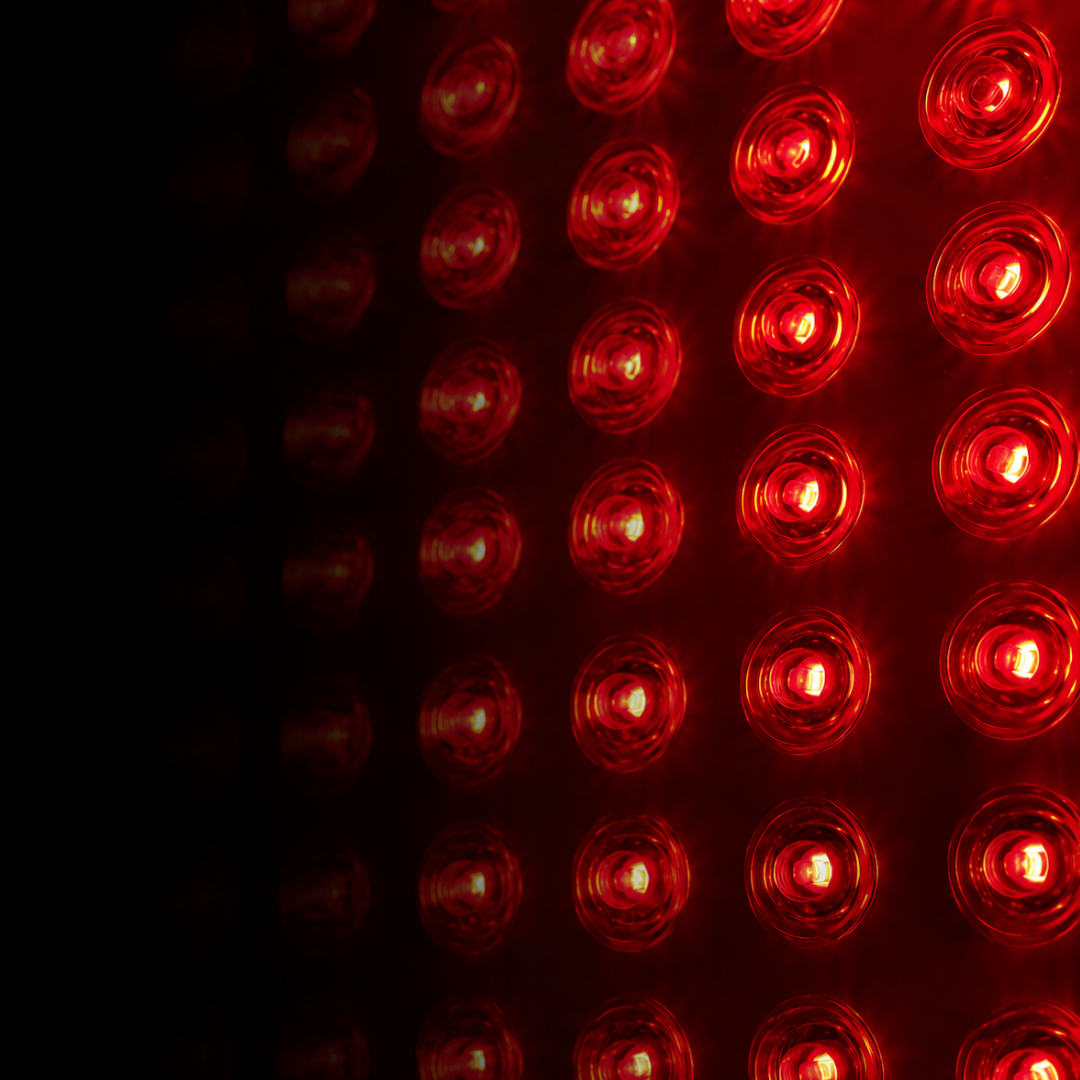
Red light therapy has become one of the most talked-about wellness technologies in recent years, showing up everywhere from luxury recovery studios and dermatology clinics to beauty routines, fitness spaces, and modern homes.
What once felt futuristic is quickly becoming part of everyday wellness culture.
But as interest grows, so does the number of devices entering the market. LED masks, compact beauty tools, and full-body panels are now everywhere, often promising similar results while offering very different experiences.
And increasingly, consumers are beginning to ask a more important question:
What is the actual difference between an LED mask and a red light therapy panel?
The answer goes far beyond aesthetics.
The rise of LED masks
LED masks became popular largely through the beauty industry.
Compact, convenient, and often associated with skincare routines, they introduced many people to the concept of light therapy for the first time. Their appeal is understandable: they feel approachable, modern, and easy to incorporate into a nightly ritual.
For surface-level skin concerns, many users report benefits such as improved glow, reduced redness, and support for overall skin appearance over time.
But as red and near-infrared light therapy evolved beyond beauty and entered the broader wellness and recovery space, attention began shifting toward something else entirely: depth, coverage, and consistency.
Why more consumers are upgrading to panels
Unlike masks, red light therapy panels are designed to treat larger areas of the body at once while delivering significantly higher light output.
This matters because light therapy is not simply about exposure - it is about delivering enough energy to the body consistently and effectively.
Panels are increasingly being used not only for skin health, but also for:
- muscle recovery
- inflammation support
- circulation
- post-workout recovery
- sleep support
- overall wellness routines
For many consumers, the appeal is no longer limited to facial skincare. It becomes part of a larger approach to recovery and long-term wellbeing.
And that shift is changing the market.
Coverage changes the experience
One of the biggest differences between masks and panels is simply scale.
A facial mask treats a relatively small surface area. A panel, on the other hand, can support the neck, shoulders, back, legs, joints, and larger portions of the body within a single session.
For people incorporating light therapy into recovery rituals or daily wellness routines, this becomes a major advantage.
The experience starts to feel less like a beauty treatment — and more like a complete wellness modality.
Power and irradiance matter more than most people realize
Another term increasingly appearing in conversations around red light therapy is irradiance, essentially the intensity or power output of the light reaching the body.
While many entry-level devices focus heavily on aesthetics or portability, higher-powered panels are designed to deliver stronger output over a greater area.
This is one reason why many consumers eventually move beyond smaller devices after their first introduction to light therapy.
As the category matures, buyers are becoming more educated. They are no longer only asking whether a device uses red light therapy, they are asking how effectively it delivers it.
LED masks introduced many people to the world of light therapy, and they continue to play a role within skincare-focused routines.
But as consumers become more informed about irradiance, treatment coverage, recovery applications, and long-term usability, panels are increasingly becoming the preferred choice for those looking for a more comprehensive experience.
The category is evolving quickly, and so are the expectations surrounding what modern wellness technology should deliver.


Leave a comment
This site is protected by hCaptcha and the hCaptcha Privacy Policy and Terms of Service apply.